pystra.results.StrongMaximumResult#
Use it: User guide · Worked example · Theory
- class StrongMaximumResult(*, method, status, message, n_limit_state_evaluations, variable_names, options=None, has_competing_points, design_point_u, design_index, radius, point_number, confidence_level, cap_probability, points_u, points_x, limit_state_values, regions)[source]#
Bases:
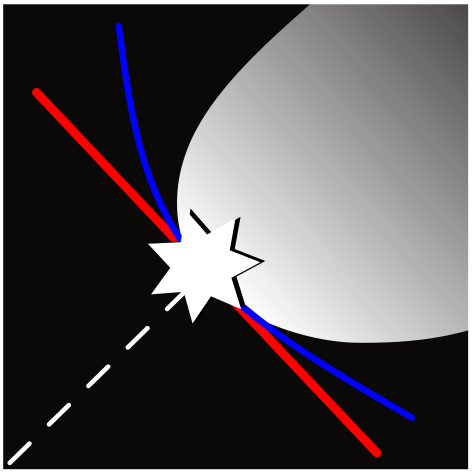
_ResultRecord of a Strong Maximum Test, a diagnostic of a FORM design point.
It is not a probability estimate, and finding no competing region does not certify the design point.
- has_competing_points#
Whether the far failure region contains sample points.
- Type:
bool
- design_point_u#
The candidate design point in standard coordinates.
- Type:
ndarray
- design_index#
Its distance from the origin.
- Type:
float
- radius#
Radius of the test sphere.
- Type:
float
- point_number#
Points sampled on the sphere.
- Type:
int
- confidence_level#
Nominal probability of detecting the reference cap.
- Type:
float
- cap_probability#
Probability that one point falls in the reference cap.
- Type:
float
- points_u, points_x
The sphere points in standard and physical coordinates, one per row.
- Type:
ndarray
- limit_state_values#
Limit-state value at each point.
- Type:
ndarray
- regions#
Boolean masks over the points:
far_failure,near_failure,far_safeandnear_safe.- Type:
Mapping[str, ndarray]
Methods
Return the points of one region as rows.
Return a plain-text report of the principal results.
- points(region='far_failure', space='u')[source]#
Return the points of one region as rows.
- Parameters:
region (
str) –far_failure,near_failure,far_safeornear_safe.space (
str) – Standard or physical coordinates.
- Return type:
ndarray
- property converged: bool#
Whether the method met its termination criteria.
- summary()#
Return a plain-text report of the principal results.
- Return type:
str