pystra.reliability.form.FORM#
Use it: User guide · Worked example · Theory
- class FORM(model, limit_state, *, options=None, on_failure='raise')[source]#
Bases:
AnalysisObjectFind a FORM design point and approximate the failure probability.
- Parameters:
model (
StochasticModel) – Named physical variables and their joint probability model.limit_state (
LimitState) – Physical response, with negative values indicating failure.options (
FORMOptions|None) – Iteration, convergence, differentiation and transformation settings.on_failure (
Literal['raise','return']) – On nonconvergence, raiseAnalysisError, which carries the unconverged record in.result, or return that record with a warning.
Notes
Call
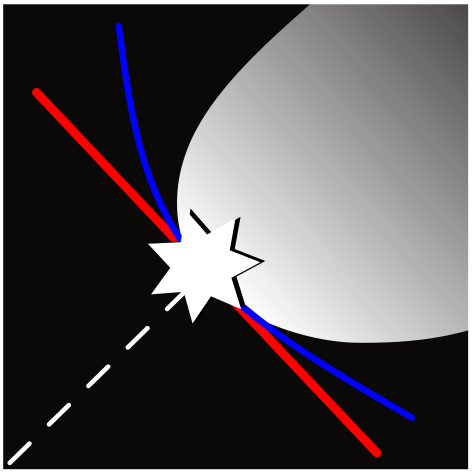
run()to obtain an immutableFORMResult. Check itsconvergedflag before using its probability or design point. Numerical convergence does not establish the accuracy of the local boundary approximation or exclude competing failure regions.Independent standard normal coordinates are the usual choice. Explicit spherical Student-t generalized Nataf instead uses a Student-t half-space tail.
FORMResult.design_indexis the signed geometric distance andFORMResult.betathe normal-equivalent index.See Running FORM and SORM for usage and FORM, SORM and design-point diagnostics for the formulation and references.